The Glow Journal
Skin Knowledge
Skin Science 101: The Barrier, Collagen, and Cell Turnover
June 2026
Beautiful skin is not luck, it is biology. Understanding three systems, your skin barrier, your collagen network, and your cell turnover cycle, explains why every great treatment and every great routine works.
Read MoreYour Skin Barrier: The Foundation of Everything
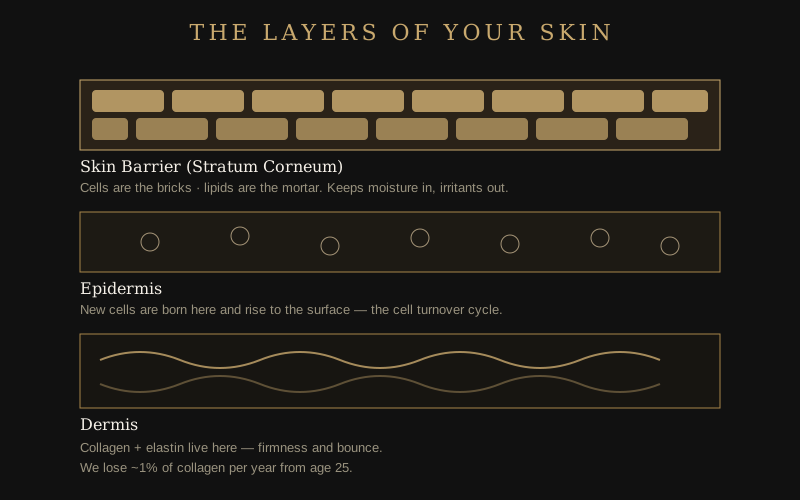
The outermost layer of your skin, the stratum corneum, works like a brick wall. The "bricks" are skin cells and the "mortar" is a blend of lipids: ceramides, cholesterol, and fatty acids. When this wall is intact, moisture stays in and irritants stay out. When it is damaged by over-exfoliation, harsh cleansers, or sun exposure, skin becomes red, tight, flaky, and reactive.
- Signs of a healthy barrier: soft, plump skin that tolerates products well
- Signs of a damaged barrier: stinging, redness, dryness, sudden breakouts
- Barrier repair heroes: ceramides, niacinamide, gentle cleansing, SPF
Almost every persistent skin problem improves when the barrier is restored first. That is why a professional skin analysis always starts here.
Collagen and Elastin: Your Skin's Scaffolding
Deeper in the dermis, collagen gives skin its firmness and elastin gives it bounce. From around age 25, we lose roughly 1 percent of our collagen every year, and sun exposure accelerates that loss dramatically.
- Collagen loss shows up as fine lines, thinning skin, and sagging
- UV exposure is responsible for the majority of visible aging
- Treatments like microneedling work by triggering fresh collagen production
The good news: collagen production can be stimulated at any age. Controlled micro-injury treatments, certain peptides, and retinoids all signal your skin to rebuild.
Cell Turnover: Why Glow Fades and How to Get It Back
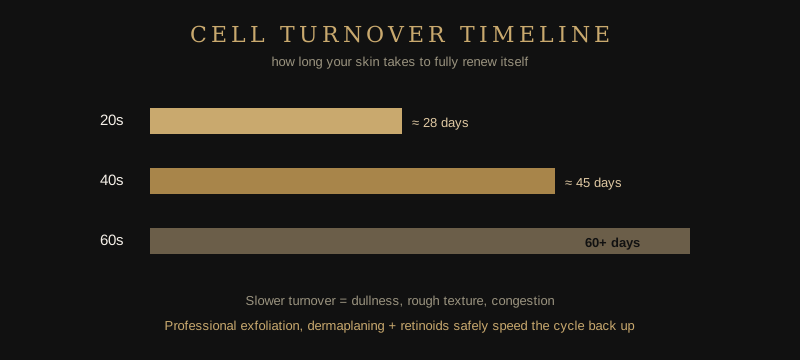
Your skin completely renews itself in roughly 28 days in your twenties. By your forties and fifties, that cycle can stretch to 45 to 60 days or more. Old, dull cells linger on the surface longer, which is why skin loses radiance with age.
- Slower turnover means dullness, rough texture, and clogged pores
- Professional exfoliation, dermaplaning, and hydrodermabrasion safely speed it up
- Retinoids are the gold-standard home ingredient for turnover support
Understanding these three systems is the difference between guessing at skincare and building results. Every treatment Francaise offers targets at least one of them, and the best plans address all three.
The Complete Anti-Aging Guide: What Actually Works
June 2026
The anti-aging industry is loud, but the science is quiet and consistent. Here is what genuinely turns back the clock, what is worth your money, and how professional treatments and home care work together.
Read MoreThe Non-Negotiable: Sun Protection
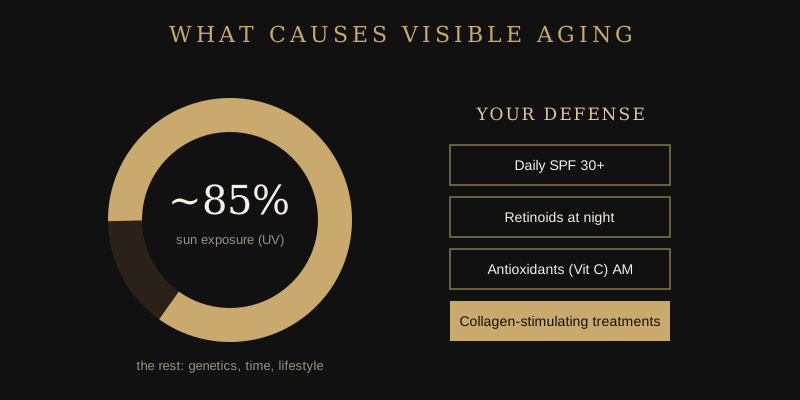
If you do only one thing for younger skin, wear SPF every single day. Up to 80 to 90 percent of visible facial aging is caused by UV exposure, not birthdays. Broad-spectrum SPF 30 or higher, every morning, reapplied if you are outdoors. It protects the collagen you have, which is far easier than rebuilding what you have lost.
Retinoids: The Most Proven Ingredient in Skincare
Retinoids (retinol, retinaldehyde, and prescription tretinoin) are the most studied anti-aging ingredients in existence. They speed up cell turnover, stimulate collagen, soften fine lines, and improve tone.
- Start low and slow: two to three nights a week, pea-sized amount
- Expect an adjustment period of mild dryness for a few weeks
- Always pair with morning SPF, retinoids increase sun sensitivity
- Avoid during pregnancy and around professional treatment days as advised
Peptides, Vitamin C, and the Supporting Cast
- Vitamin C (morning): an antioxidant that brightens, defends against environmental damage, and supports collagen
- Peptides: messenger molecules that signal skin to produce collagen, excellent for those who cannot tolerate retinoids
- Hyaluronic acid: instant plumping hydration that softens the look of lines
- Niacinamide: strengthens the barrier, refines pores, evens tone
Where Professional Treatments Change the Game
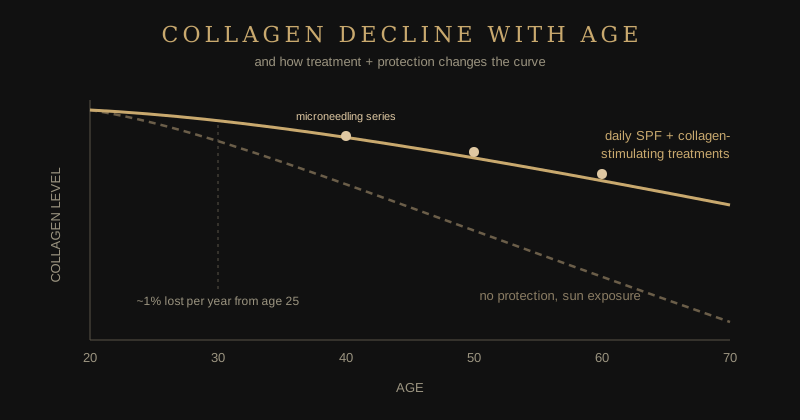
Home care maintains. Professional treatments transform. The difference is depth: professional tools reach where creams cannot.
- Microneedling: the gold standard for collagen induction, softening lines, firming, and improving texture over a series
- HIFU skin tightening: focused ultrasound that lifts and firms at the deeper structural level, no needles, no downtime
- Hydrodermabrasion: deep hydration and exfoliation that restores immediate radiance
- LED light therapy: red wavelengths stimulate cellular energy and collagen production
The Realistic Timeline
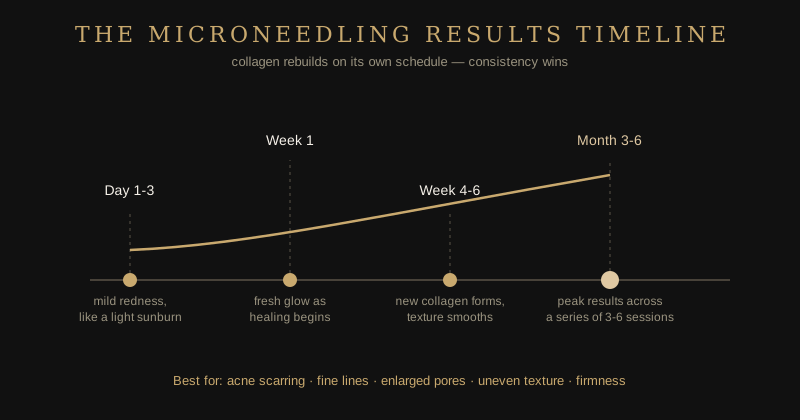
Collagen remodeling takes time. Most clients see initial glow immediately, meaningful texture change at 4 to 6 weeks, and the most dramatic firmness improvements at 3 to 6 months into a treatment series. Consistency beats intensity, a steady plan outperforms occasional heroic efforts every time.
The best anti-aging strategy is layered: daily SPF, a smart evening routine, and a professional treatment series matched to your skin. That is exactly what a consultation with Francaise is designed to build.
Microneedling vs. Nanoneedling: Which Is Right for Your Skin?
June 2026
They sound similar and both use needling technology, but microneedling and nanoneedling work at completely different depths and solve different problems. Here is how to choose.
Read MoreThe Key Difference: Depth
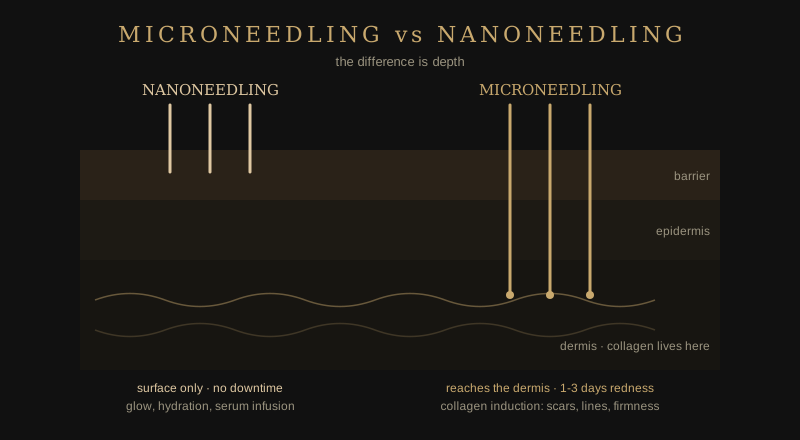
Microneedling uses fine sterile needles that reach the dermis, the deeper layer where collagen lives. Nanoneedling uses microscopic cone-shaped tips that work only within the epidermis, the surface layer, creating channels thinner than a human hair.
Think of it this way: microneedling renovates the foundation, nanoneedling polishes the finish.
Microneedling (Collagen Induction Therapy)
- Best for: acne scarring, fine lines, skin laxity, enlarged pores, stretch marks
- How it works: controlled micro-injuries trigger the wound-healing cascade, producing fresh collagen and elastin
- Downtime: 24 to 72 hours of redness, similar to a mild sunburn
- Results: progressive improvement over a series of 3 to 6 sessions, spaced about 4 weeks apart
- Sensation: numbing cream is applied, most clients find it very tolerable
Nanoneedling
- Best for: dull skin, dehydration, fine surface lines, uneven tone, sensitive skin, pre-event glow
- How it works: creates microscopic surface channels that boost serum absorption by up to 97 percent, infusing actives far deeper than hand application
- Downtime: none, slight pinkness fades within hours
- Results: immediate plumpness and radiance, cumulative with regular sessions
- Sensation: painless, often described as relaxing
Which Should You Choose?
Choose microneedling when you want structural change: scars, lines, firmness. Choose nanoneedling when you want surface perfection: glow, hydration, product infusion, or when your skin is too sensitive for deeper work. They also pair beautifully, many clients alternate, using microneedling for remodeling and nanoneedling to maintain radiance between sessions.
Not sure where your skin falls? That is what the consultation is for. Francaise will assess your skin in person and build the protocol that gets you there safely.
Build Your Perfect Routine: AM and PM by Skin Type
June 2026
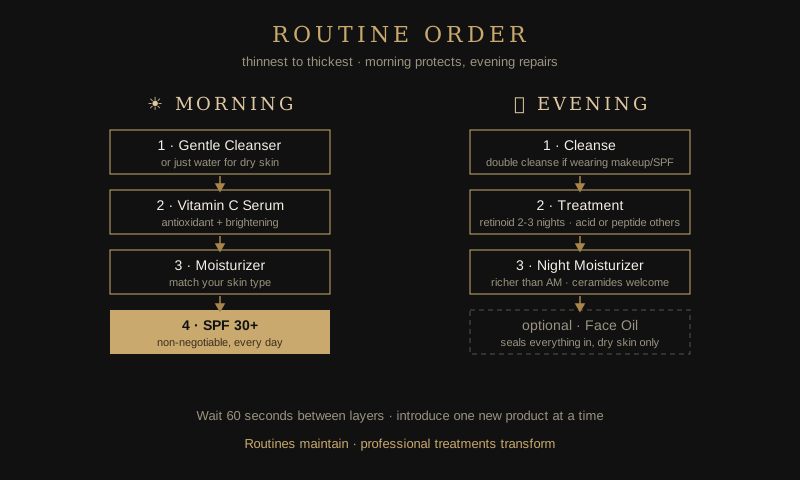
A great routine is not ten steps, it is the right four or five, in the right order, for your skin type. Use this guide to build yours, morning and night.
Read MoreThe Universal Rules
- Order matters: thinnest to thickest texture, water-based before oil-based
- Morning is about protection, evening is about repair
- Introduce one new product at a time, give it two weeks
- SPF every morning, no exceptions, it is the most powerful anti-aging step that exists
Dry or Mature Skin
- AM: creamy cleanser (or just water), hydrating toner or essence, vitamin C serum, rich moisturizer, SPF 30+
- PM: cleansing balm or oil, retinoid 2 to 3 nights weekly, peptide serum on off nights, ceramide-rich night cream
- Pro treatment match: HydrodermFacial for deep hydration, microneedling for firmness
Oily or Combination Skin
- AM: gel cleanser, niacinamide serum, lightweight gel moisturizer, non-comedogenic SPF
- PM: double cleanse if wearing makeup or SPF, salicylic acid (BHA) 2 to 3 nights weekly, retinoid on alternate nights, light moisturizer
- Do not skip moisturizer: dehydrated oily skin produces more oil, not less
- Pro treatment match: Deep Clean Facial for congestion, nanoneedling for tone
Sensitive or Reactive Skin
- AM: rinse with lukewarm water or use a fragrance-free cream cleanser, niacinamide or centella serum, barrier-repair moisturizer, mineral SPF
- PM: gentle cleanser, ceramide serum, rich but simple moisturizer
- Patch test everything, avoid fragrance and high-strength acids
- Pro treatment match: customized corrective facial, nanoneedling, LED therapy
Balanced Skin (Maintenance Mode)
- AM: gentle cleanser, antioxidant serum, moisturizer, SPF
- PM: cleanser, retinoid 2 to 3 nights weekly, moisturizer
- Your goal is consistency and protection, you are preserving what you have
When in Doubt, Simplify
If your skin is acting up, strip back to cleanser, moisturizer, and SPF for two weeks, then rebuild slowly. And remember: a routine maintains your skin, but professional treatments are what move it forward. The best results come from both working together.
The Ingredient Glossary: What Is Actually in Your Skincare
June 2026
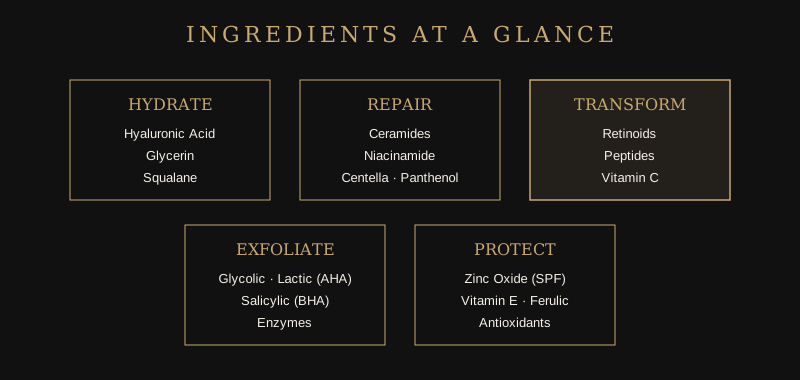
Retinol, niacinamide, AHAs, peptides, ceramides. Skincare labels read like a chemistry exam. Here is your plain-English guide to the ingredients that matter, what they do, and who they are for.
Read MoreThe Hydrators
- Hyaluronic acid: a moisture magnet that holds up to 1,000 times its weight in water. Instantly plumps and softens fine lines. For everyone.
- Glycerin: the unsung workhorse humectant in nearly every good moisturizer. Gentle, effective, ideal for all skin types.
- Squalane: a lightweight oil that mimics skin's natural sebum. Seals in hydration without clogging pores.
The Repairers
- Ceramides: the lipids that hold your skin barrier together. Essential for dry, sensitive, or over-exfoliated skin.
- Niacinamide (vitamin B3): the multitasker, strengthens the barrier, refines pores, calms redness, and evens tone. Plays well with everything.
- Centella asiatica (cica): a botanical soother for irritated, reactive skin.
- Panthenol (pro-vitamin B5): calms and hydrates, excellent post-treatment.
The Transformers
- Retinol and retinaldehyde: vitamin A derivatives that accelerate cell turnover and stimulate collagen. The most proven anti-aging ingredients available without prescription.
- Peptides: short chains of amino acids that signal skin to build collagen. A gentler complement or alternative to retinoids.
- Vitamin C (L-ascorbic acid): an antioxidant that brightens, fades dark spots, and protects against environmental damage. Best in the morning under SPF.
The Exfoliators
- Glycolic acid (AHA): the smallest acid molecule, penetrates deepest. Smooths texture and boosts radiance. Best for normal to oily, non-sensitive skin.
- Lactic acid (AHA): gentler and hydrating, ideal for dry or mature skin.
- Salicylic acid (BHA): oil-soluble, so it clears inside the pore. The go-to for breakouts and blackheads.
- Enzymes (papaya, pumpkin): the gentlest exfoliation, great for sensitive skin.
The Protectors
- Zinc oxide and titanium dioxide: mineral SPF filters that sit on the skin and reflect UV. Best for sensitive skin.
- Antioxidants (vitamin E, ferulic acid, resveratrol): neutralize free radicals from UV and pollution, and make vitamin C more stable and effective.
A Note on Mixing
Some combinations need spacing: retinoids and strong acids on different nights, vitamin C in the morning and retinol at night. If your routine has you confused, bring your products to your appointment, ingredient triage is part of what Francaise does in every consultation.
Microneedling: Who It's Best For + What Results to Expect
May 2026
Microneedling has become one of the most sought-after treatments for improving skin texture, boosting collagen, and creating a healthier, more radiant complexion naturally. But one of the most common
Read More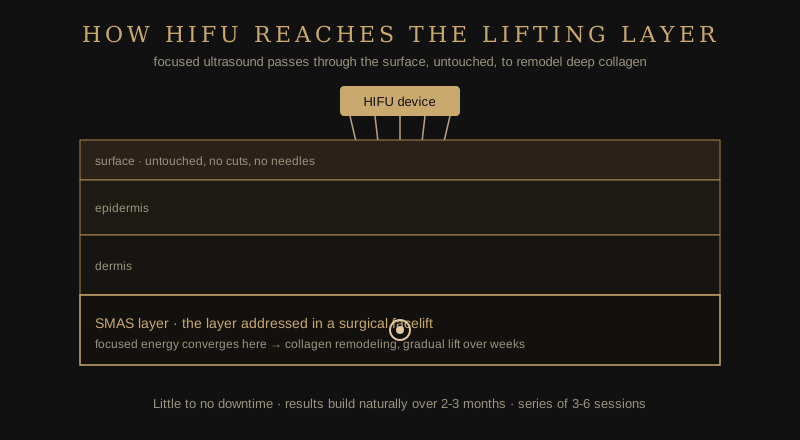
What Is HIFU and How Does It Work?
May 2026
If you've been searching for a non-surgical way to tighten, lift, and support collagen production naturally, you may have come across HIFU treatments. HIFU has become one of the most talked-about trea
Read More